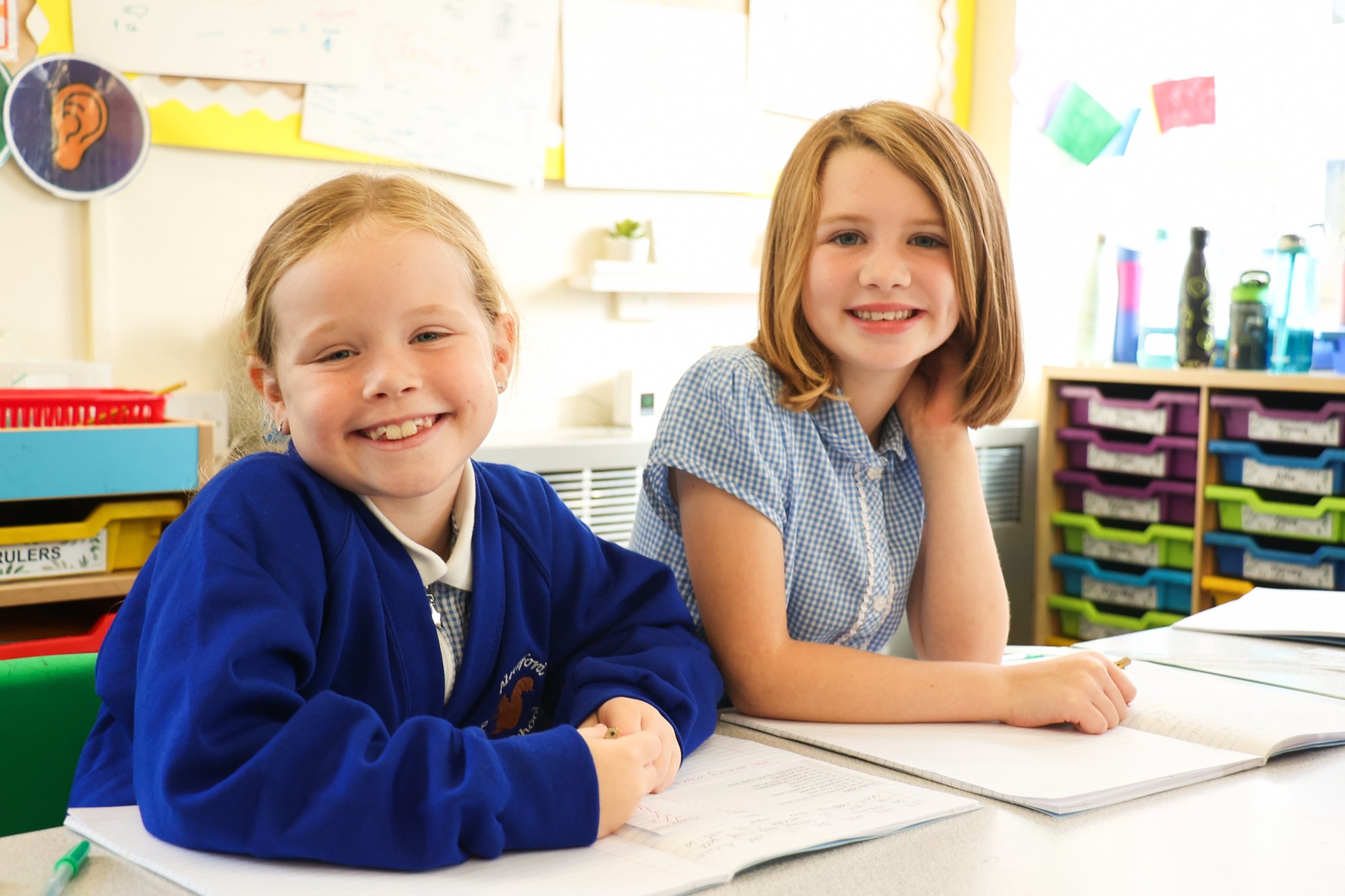

Welcome to Ladybirds Class Page
Year 1
Class Teacher - Mrs Tunmore
Class LSA - Mrs Collins/Mrs Chinery
To contact us, please email- office@alresford.essex.sch.uk
Welcome to Year 1!
Please read our meet and greet PowerPoint as well as the Autumn term curriculum letter.
This will give you some general information about what happens in Year 1.
Year 1 Long Term Plan
Below you will find a long term overview showing the topics/ subjects your child will be learning in Year 1.
Phonics
Phonics forms the basis of reading and writing in Year 1. At Alresford, we have created our own phonics scheme that supports our children to learn all the sounds they need to read and write.
In June, in Year 1, the children will take part in the Phonics Screening Check rolled out by the Government to assess their phonic knowledge. The children will be required to read 40 words, 20 will be real words and 20 will be 'nonsense' words (or pseudo words). You will be informed in the Summer Term as to whether your child has passed the Phonics Screening Check. If they don't, they will receive additional support in Year 2 and resit their check in the following June.
Below is an example of a Phonics Screening Check.
Reading-
Phonics is part of your child's journey of learning to read. We call our reading books 'practise books.' This is because your child will read this book more than once to practise all their reading skills and to help build fluency right from the beginning. Our reading books are banded in phonics phases. We don't send home a reading book until your child is confident with blending words. We find this makes reading at home a far more positive experience.
Every child has a reading day each week. This is when they will read on a 1:1 basis with an adult. Their reading day is the day they will change their reading book. The children will keep their reading book for a week, possibly 2 weeks as it is important the children read their book until they are fluent so they are recognising the words as a whole and to give them more confidence when reading.
We believe that reading is the golden key that unlocks a world of imagination, curiosity and life-long learning. Beyond helping children to succeed academically, getting lost in a good book builds empathy, expands vocabulary and boosts confidence. To help foster a genuine love of reading both in the classroom and at home, we are launching a new reading initiative for this year. Alongside other reading events and activities we hope to inspire our children to become more involved and excited about reading. Reading for just 10 minutes a day makes a huge difference to their learning.
At the beginning of term, every child will receive a golden ticket bingo board and their reading log. Each time your child reads at home or is read to – whether it is their school reading book, a comic, an audio book, a favourite bed time story or a chapter book – simply sign or initial their reading log and add the number of minutes they have read. We would like children to aim for at least 10 minutes of reading a day or 70 minutes a week. Each square is split into 70 minutes. If they don’t complete 70 minutes a week one week, the minutes they have already accumulated will roll over to the following week. Staff will check reading logs once a week. They will make a note of how many minutes your child has read. For every 70 minutes they will collect a stamp / sticker and the staff member checking will initial it. Any additional minutes will ‘roll over’ to the next week. If a child finishes a golden ticket board, they can have a new one! At each milestone they will earn rewards.
At each milestone they will earn rewards:
|
Reading Milestone |
Rewards Earned |
|
5 tickets |
Bronze Certificate |
|
10 tickets |
Silver Certificate and bookmark |
|
Completed Board |
Gold Certificate and extra 10 minutes playtime (this playtime will be half termly) |
|
Completing 2 boards or more |
Platinum Certificates Entry into end of term raffle for a book token. One entry for every completed board. |
If your child's reading day is a Monday for example, their reading minutes are counted from Monday to Monday. If their reading day is Tuesday, there's will be counted from Tuesday to Tuesday and so on.
VIPERS
We also refer to the VIPERS when sharing a book as a class. These can be used to support the children when asking questions at home too.
V - vocabulary - do the children understand the words they are reading/ the new word they have just come across?
I - infer - can the children make a guess about how the characters are feeling or why they did something?
P - predict - can the children guess what might happen next?
E - explain - can the children explain their answer?
R - retrieve - can the children retrieve an answer from the text?
S - summarise - can the children summarise what they have just read or what happened in the story?
Spellings
Spelling are given to the children every Monday in a red spelling book for children to learn to read and spell. These books will need to be returned to school each Monday and should not be written in. These spelling words will be words including the sounds the children have been learning in school and tricky words (words which can't be sounded out). Although the children are no longer tested on these spellings, we are always looking to see if they can apply what they have learnt in their writing and across other subjects. Therefore, it would be great if these spellings are practised at home. Just spending a few minutes regularly, at home reading and spelling these words will benefit your child and will increase their understanding and confidence.
Below are some tips for practising spellings.
Tricky words
By the end of Year 1 children are expected to read and spell the tricky words shown below. In Reception they will have become familiar with the Phase 2 (orange) and Phase 3 (purple) words, in Year 1 we will continue to focus on these and build on their knowledge of the Phase 4 (green) and Phase 5 (pink) tricky words.
Maths
The importance of children developing their mathematical understanding is vitally important. Your child will be involved in Maths learning each day at school but it is also beneficial for children to continue this learning at home.
In order to support you with this we focus on key instant recall facts (KIRFs) each half term. These are areas of Maths we focus on in school and encourage parents to continue this at home. Each half term we will share a KIRFs parent support sheet detailing ways in which you can support your child.
Please see below information about KIRFs and the Autumn 1 KIRFs parent support sheet.
Just a few minutes each day can make all the difference!
Online Maths support
Below are some online resources you and your child can use at home.
Numbots
Numbots is an online game that will support your children to understand and recall addition and subtraciton number facts fluently. This will consolidate what they are learning in class.
Pupils choose their own Bot before launching into ‘Story’ and ‘Challenge’ modes. For the most effective practice, it is suggested that children should play for at least 3 minutes a day, 4 or 5 times a week.
As they progress, pupils collect achievement badges and unlock hundreds of new levels and challenges.
In the Story Mode they will also discover parts, helping RustyBot upgrade from Rust to Diamond - so he can shine inside and out.
Numbot passwords will be added to your child's reading records once we have introduced this at school.
White Rose 1 minute Maths App
Quick 1-minute tasks focusing on addition, subtraction, multiplication and division. Children can choose any topic; they then answer a different set of questions each time. If they are struggling with a question, a ‘Hint’ button will give them a helpful, visual clue. When the 1 minute’s up, they’ll see a feedback screen telling them how they’ve done. Download the app on Apple, Google or Amazon.
PSHE in Year 1
We will be using the SCARF curriculum to explore PSHE this year.
Take a look below at what we will be learning about in PSHE in Year 1. For further information please look at the PSHE curriculum page on our website.
. https://www.alresford.essex.sch.uk/curriculum/pshe
PE
Our PE days are Tuesday and Thursday (Autumn Term). Please make sure your child is wearing the appropriate PE kit on these days and long hair is tied back.
If your child wears earrings, please make sure they are removed on these days, these cannot be taped. Please be mindful that PE is part of the national curriculum and it is important your child accesses these lessons, as earrings cannot be taken out for the first 6 weeks we advise parents to get children’s ears pierced at the start of the long summer break so their PE learning is not impacted.
Children with hair that is shoulder length or longer must have an appropriate accessory in school so that they can tie back their hair for PE.
For further information see our uniform policy- https://www.alresford.essex.sch.uk/policies